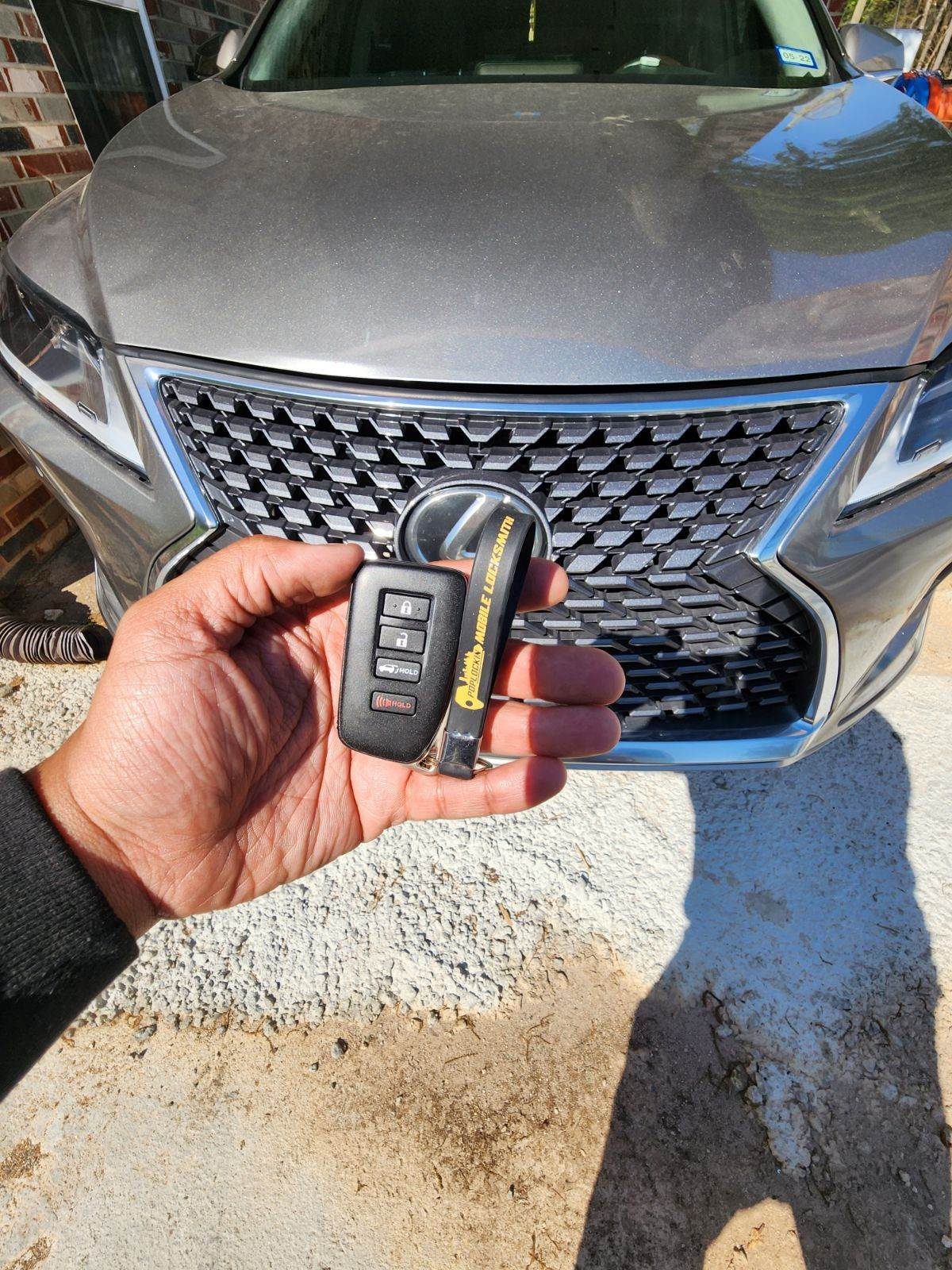
When drivers lose their only set of car keys, the most common question they ask is: "Can a locksmith really make a brand-new working key if I do not have the original key to copy?" The short answer is yes. Professional automotive locksmiths do not rely on tracing old key blades. Using mechanical cylinder decoding, national key code databases, and computerized diagnostic programming, a skilled technician can originate a factory-specification replacement key directly where your vehicle sits.
Key Duplication vs. Key Origination: What Is the Difference?
To understand how a locksmith creates a key from scratch, it helps to distinguish between two completely different locksmith procedures:
- Key Duplication (Copying): This occurs when you hand an existing, working key to a technician or hardware store clerk. A tracing machine guides a stylus along the physical grooves or notches of your original blade while a rotating cutter grinds an identical contour into a fresh key blank. Duplication requires having a functional physical template.
- Key Origination ("All Keys Lost" Generation): This occurs when no key exists anywhere. There is nothing to trace. The locksmith must reverse-engineer the exact factory cuts designed for your car's lock cylinders and match the precise encrypted transponder code expected by the vehicle's engine control computer.
How Automotive Locksmiths Create Keys Without the Original
Modern vehicles use sophisticated anti-theft systems consisting of two layers: a physical mechanical lock (door cylinder and ignition) and an electronic immobilizer system (RFID transponder chip or wireless smart proximity sensor). Generating a replacement key requires addressing both layers.
Method 1: Direct Wafer Decoding (Lishi Keyway Tools)
The most common and non-invasive field method involves reading the physical lock tumblers directly through the exterior driver door keyway. Automotive lock cylinders contain a series of spring-loaded brass wafers, each engineered to a specific factory depth (typically 4 to 8 different cut depths across 7 to 10 wafer positions).
Using a specialized precision pick and decoder tool tailored to your vehicle's specific keyway profile (such as HU101 for Ford, HU66 for Volkswagen/Audi, HON66 for Honda, or TOY48 for Toyota/Lexus), the locksmith gently probes each wafer position. By measuring the physical resistance and read-out scale on the tool, the technician determines the exact numerical bitting code (for example: 1-3-2-4-2-1-4-3).
Method 2: Key Code Lookup via Vehicle Identification Number (VIN)
Every vehicle leaves the factory with a master key code recorded in manufacturer databases. When you prove legal vehicle ownership, authorized automotive locksmiths can access secure industry credentialing registries (such as the NASTF Vehicle Security Professional network) to pull the original mechanical key code using your 17-digit VIN.
Once the bitting code is retrieved, it is entered into a computerized CNC milling machine. This produces a key blade with identical dimensions to the one that came with the car when it rolled off the assembly line.
Method 3: Decoding the Ignition or Glove Box Cylinder
In older vehicles where exterior door cylinders have been replaced or heavily worn, or where door wafers only provide a partial cut sequence, locksmiths can access secondary lock cylinders. On many models, the glove box or trunk cylinder contains all but one or two wafers, allowing the locksmith to decode the majority of the cuts and "progression" the remaining depths using computer software.
Computerized Laser Key Cutting (CNC Milling)
Once the numerical cuts are determined, modern automotive keys cannot be cut on simple hardware store grinding wheels. Most vehicles built after 2005 utilize high-security "laser-cut" or "sidewinder" keys, which feature an internal serpentine track routed down the face or outer edges of a rectangular metal shank.
Mobile locksmith vans carry computerized, calibrated CNC key cutting machines powered by onboard inverter battery systems. The machine rotates a high-speed carbide end-mill bit at 10,000+ RPM, carving the exact depths to tolerances measured in hundredths of a millimeter. This guarantees the blade glides smoothly through wafer tumblers without catching, sticking, or wearing down lock components.
Electronic Transponder & Smart Fob Programming
Cutting the physical blade is only half the job. If you insert a freshly cut mechanical key into a modern vehicle's ignition and turn it, the dashboard starter will crank the engine for one second, but the vehicle will immediately shut down. The anti-theft security light (often a padlock or key icon) will blink rapidly on the gauge cluster.
This happens because the car's engine control unit (ECU) has not received a valid cryptographic handshake from a registered transponder chip. To complete the key creation:
- The locksmith connects a commercial diagnostic programming interface to your vehicle's 16-pin OBD-II port under the dashboard.
- The diagnostic computer initiates a secure diagnostic session with the immobilizer or Body Control Module (BCM).
- On vehicles requiring encrypted security access (such as Nissan, General Motors, Ford, Stellantis, or Toyota), the software performs an algorithmic security bypass or calculates a rolling PIN code.
- The system enters "Key Learning" mode, registering the digital RFID serial number of the new transponder chip into the vehicle's authorized memory.
- If requested, the locksmith can simultaneously wipe all previously registered keys from vehicle memory, ensuring that if your lost keys were stolen, they can never be used to drive your car away.
What Information Do You Need to Provide?
Because automotive locksmiths possess tools capable of originating keys for any vehicle, strict legal and ethical verification safeguards are enforced. Before an on-site key can be originated, you must provide:
- Vehicle Identification Number (VIN): Visible through the lower driver-side windshield or on your registration document.
- Proof of Ownership: State registration card, vehicle title, or current insurance binder showing your legal name.
- Government Photo ID: Driver's license or state ID card matching the vehicle documentation.
- Exact Location: The address, cross streets, or parking structure where the vehicle is stationary.
Dealership vs. Mobile Locksmith: Making the Right Choice
When all keys are lost, dealerships often recommend having your car flatbed-towed to their service department. However, this introduces substantial drawbacks: tow fees, service department scheduling delays lasting several business days, and retail dealership parts markups. In contrast, an automotive mobile locksmith travels directly to your location, cuts the key on the tailgate of their mobile van, programs the electronic transponder, and hands you a working key in a single roadside visit.